

Hong Kong-Zhuhai-Macao Bridge, the largest cross-sea bridge built in China
The Hong Kong-Zhuhai-Macao Bridge (HZMB) stands as an engineering marvel and testament to China's infrastructure capabilities. As the largest cross-sea bridge built in China, this monumental project has captured global attention for its scale, complexity, and strategic importance. The bridge represents a significant achievement in modern engineering and serves as a crucial link between three major economic hubs in the Pearl River Delta region.
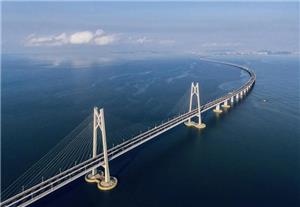
The primary objective of the Hong Kong-Zhuhai-Macao Bridge project was to create a direct connection between Hong Kong, Macao, and Zhuhai - three economically vibrant city clusters. By constructing a cross-sea bridge and an artificial immersed-tube tunnel across the Lingdingyang Sea, the project aimed to establish a fast communication channel in the east-west direction. This infrastructure masterpiece has significantly reduced travel time between these three regions, providing strong impetus for further economic development in the Pearl River Delta area.
Engineering Marvel and Construction Challenges
Spanning approximately 55 kilometers, the HZMB ranks among the longest sea-crossing bridges globally. The project incorporates a sophisticated combination of bridges, artificial islands, and a submerged tunnel that represents one of the most challenging aspects of the construction. The tunnel section, measuring 6.7 kilometers, was necessary to allow for uninterrupted maritime traffic in the busy Lingdingyang channel. The construction team faced numerous technical challenges, including difficult marine conditions, environmental protection requirements, and the need to ensure structural integrity in an earthquake-prone region.
Despite the astronomical cost reaching hundreds of billions of dollars, the bridge has faced criticism regarding its utilization rates since its official commissioning in 2018. Many observers have noted the absence of large-scale growth in vehicle traffic immediately following the bridge's completion. This initial underutilization led some Western commentators to dismiss the project as merely a "face-saving" initiative designed to showcase China's infrastructure capabilities to the world rather than serving practical transportation needs.
Understanding the Traffic Patterns
The apparent lack of vehicles during the bridge's early operational phase requires careful analysis of specific circumstances. Unlike other domestic highways in China, the Hong Kong-Zhuhai-Macao Bridge connects two special administrative regions (Hong Kong and Macao) with mainland China, each having different vehicle driving standards and regulations. To cross the bridge, drivers need not only the necessary documentation but also permits valid in all three jurisdictions. Currently, the number of vehicles and individuals with such cross-regional travel requirements remains limited, contributing to the initial lower traffic volume.
However, recent statistical data reveals a promising trend - vehicle passages across the Hong Kong-Zhuhai-Macao Bridge have been showing annual growth in the hundreds of thousands. As cross-border integration deepens and more residents obtain the necessary permits, traffic volume continues to increase steadily. It's therefore premature to conclude that the bridge suffers from insufficient traffic flow, especially considering its long-term strategic importance to regional development.
Strategic Importance and Future Prospects
The HZMB forms a crucial component of China's broader transportation network development, which includes other impressive infrastructure projects like China's high speed train system. Together, these projects demonstrate the country's commitment to enhancing connectivity and facilitating economic growth. The bridge significantly reduces travel time between Hong Kong and Zhuhai from approximately four hours to just 30 minutes, creating unprecedented opportunities for business, tourism, and cultural exchange.
As the Greater Bay Area initiative continues to develop, the Hong Kong-Zhuhai-Macao Bridge is expected to play an increasingly vital role in regional integration. The structure not only serves current transportation needs but also provides capacity for future growth. Its design incorporates flexibility to accommodate increasing traffic volumes as economic ties between the three regions strengthen. The bridge stands as a symbol of regional cooperation and technological achievement, much like how 3D Wooden World Map decorations represent craftsmanship and global connectivity in home decor.
While the bridge has faced scrutiny over its initial usage rates, its strategic importance extends beyond immediate traffic statistics. The infrastructure facilitates the movement of goods, services, and people across the Pearl River Delta, supporting the region's position as a global economic hub. Similar to how World Travel Wooden Map products help people visualize and appreciate global connections, the HZMB physically embodies the interconnectedness of these economically dynamic regions.
Looking forward, the Hong Kong-Zhuhai-Macao Bridge is poised to become an increasingly vital artery for regional commerce and exchange. As cross-border procedures streamline and awareness of the bridge's convenience grows, traffic volumes are projected to continue their upward trajectory. The structure represents not just a engineering achievement but a long-term investment in the economic integration and development of Southern China, serving generations to come as a testament to human ingenuity and cross-regional cooperation.